Pressure measurement is a fundamental part of many engineering systems, from monitoring hydraulic lines in heavy machinery to regulating process control in chemical plants. Engineers depend on accurate data to ensure safety, performance and efficiency across these complex environments. At the heart of this process lies the pressure sensor — a critical component that converts physical pressure into electrical signals engineers can interpret and analyse.
From aerospace to subsea engineering, the ability to measure pressure accurately under extreme conditions supports everything from design validation to predictive maintenance. As industries move towards smarter, data-driven systems, the precision and reliability of pressure sensors have never been more important.
How Pressure Sensors Work
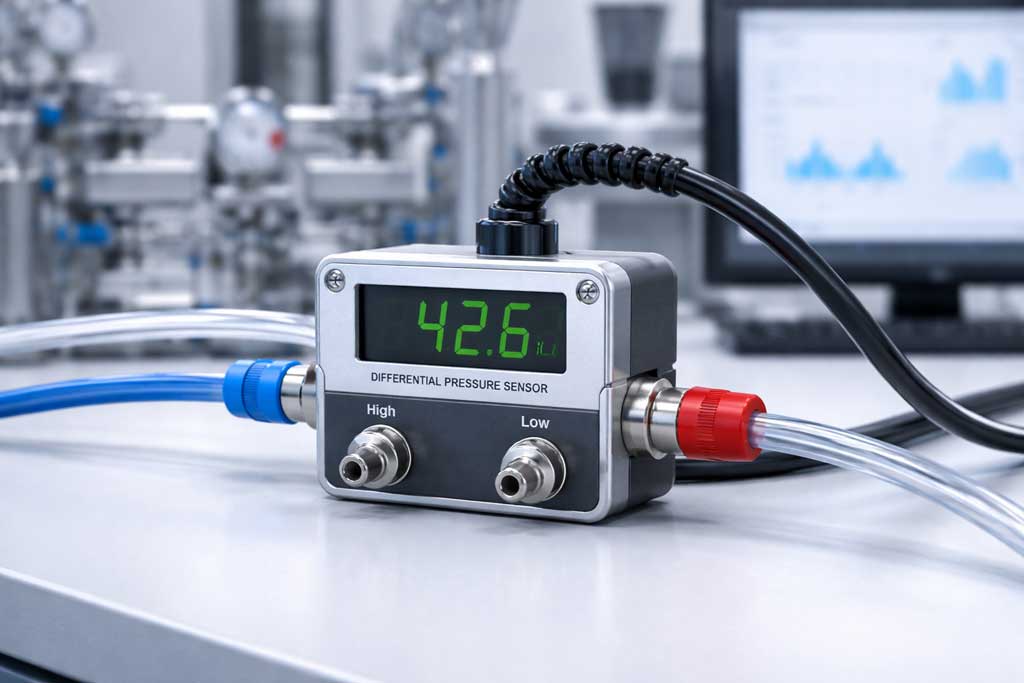
A pressure sensor detects the force of a fluid (liquid or gas) on a surface and translates it into an electrical signal. The most common principle behind this is the conversion of mechanical strain into voltage — using technologies such as piezoelectric, capacitive or strain gauge sensing.
For example, in a strain gauge-based sensor, a diaphragm flexes under pressure, creating measurable resistance changes in the strain gauge attached to it.
Advanced signal conditioning electronics then amplify and convert this signal for analysis. Modern digital sensors go further by integrating smart features like temperature compensation, real-time diagnostics and digital calibration, delivering more dependable performance across fluctuating environmental conditions.
Applications Across Engineering Fields
Pressure sensors play an indispensable role in diverse engineering applications. In automotive systems, they ensure accurate fuel injection, turbocharger performance and tyre pressure monitoring. In aerospace, precision sensors help regulate cabin pressure, hydraulic systems and altitude readings, all of which are vital to safety and performance.
Civil engineers use them to monitor groundwater levels and structural stress, while process engineers rely on them to maintain controlled conditions in production environments. Whether measuring micro-pressures in medical devices or extreme pressures in oil exploration, each pressure sensor must be tailored to its surrounding operational demands — including temperature, chemical compatibility and physical vibration.
Advances in Sensor Design and Materials
Modern engineering has pushed sensor design forward through materials science, miniaturisation and digital signal processing. Silicon-based microelectromechanical systems (MEMS) have reduced size while increasing accuracy, allowing integration into compact or mobile systems where space is at a premium.
At the same time, innovative materials such as stainless steel and titanium alloys ensure durability in harsh industrial settings. Engineers also have access to hermetically sealed sensors designed to perform flawlessly in corrosive or high-moisture conditions. Wireless connectivity and IoT integration continue to evolve the role of the pressure sensor, turning it into a strategic data source that drives real-time performance insights and automation.
Ensuring Accurate and Reliable Data
The value of any pressure sensor lies not only in its design but also in its calibration, installation and environmental resilience. For engineers, selecting the right sensor means considering accuracy class, range, media compatibility and electrical interface. A misalignment between sensor type and application can result in drift, slow response times or inaccurate readings.
Brands and suppliers supporting engineering teams increasingly focus on providing devices tested for stability, repeatability and long-term reliability. With growing demand for predictive maintenance and process optimisation, consistent and traceable pressure data has become a core requirement in engineering system design.
Looking Ahead to the Future of Pressure Measurement
The evolution of pressure sensor technology reflects the broader trends shaping modern engineering: connectivity, precision and efficiency. As predictive analytics, AI and Industry 4.0 systems expand, sensors are taking centre stage as both data sources and performance enablers.
From compact configurations in portable medical devices to advanced, networked solutions in industrial automation, the pressure sensor continues to prove itself indispensable. For engineers designing tomorrow’s systems, progress in sensor technology offers not just better measurement — but smarter, interconnected insights that improve the entire engineering process.
Featured image credit: AI generated.