Innovation in science and engineering is often associated with dramatic breakthroughs: a new material, an advanced machine or a technology that appears to change an entire industry overnight. In reality, some of the most valuable innovations are considerably less spectacular. They can begin with a small observation, an inefficient process or a problem that engineers have simply learned to work around.
Innovation Starts With Better Questions
A useful engineering idea does not necessarily begin with the question, “What can we invent?” It may start with something much more practical: “Why are we doing it this way?”
That change in perspective can reveal opportunities hidden within established processes. A component might be redesigned to use less material. A sensor could provide information earlier in a production cycle. Software might automate a repetitive calculation that previously consumed hours of engineering time.
These are not necessarily revolutionary ideas in isolation, but their combined effect can be significant. Innovation frequently comes from understanding an existing system well enough to identify where it can be made simpler, faster, safer or more efficient.
Bringing Science Into the Design Process
Scientific research provides engineers with an expanding range of possibilities. Developments in materials science, electronics, computing and manufacturing are creating opportunities that would have been difficult to imagine a generation ago.
Advanced materials, for example, can offer combinations of strength, flexibility, conductivity or resistance that make entirely new designs possible. Miniaturised sensors can gather information from environments where conventional equipment would be impractical. Meanwhile, improvements in simulation and modelling allow engineers to investigate designs before committing to expensive physical prototypes.
The important step is translating possibility into practical application. A technology may work perfectly in a laboratory but still need to overcome issues involving cost, reliability, maintenance, manufacturing and integration before it becomes commercially useful.
Testing Ideas Before Scaling Them
Good innovation leaves room for experimentation. Prototypes, simulations and controlled trials allow engineers to establish whether an idea works outside the original concept.
This is particularly important when a new technology interacts with an existing system. A component that performs well independently may behave differently once exposed to vibration, temperature changes, pressure, electrical interference or other real-world conditions.
Testing therefore does more than prove that an idea works. It can reveal how the idea needs to evolve.
The Value of Incremental Innovation
Not every successful engineering innovation needs to transform an entire industry. Incremental improvements can deliver substantial benefits when they are applied consistently.
Reducing energy consumption by a few percent, improving measurement accuracy, extending component life or removing a small source of production waste may appear modest individually. Across a large facility or an entire product range, however, those improvements can become commercially meaningful.
The most useful innovations are often those that solve a genuine problem. They combine scientific understanding with engineering practicality, creating solutions that can move beyond the drawing board and perform reliably in the real world.
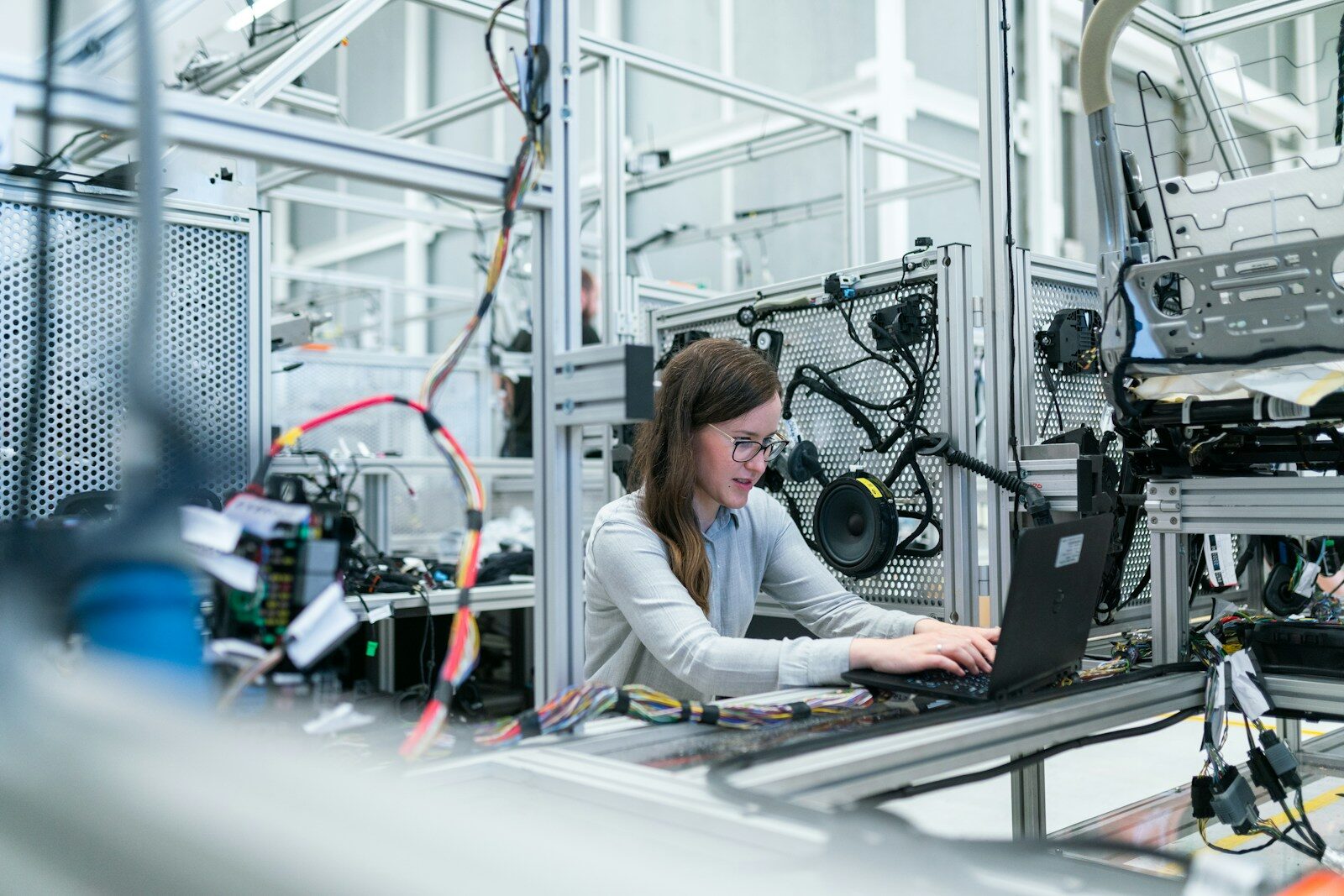
Photo by ThisisEngineering.